Where the environmental impact comes from
Comparing music streaming with physical media is not as simple as asking which one uses less energy. The answer depends on how the music is delivered, how often it is played, how long a format lasts, how much equipment is already in use, and what happens at the end of life.
Streaming shifts the burden toward networks, data centers, and the devices people use to listen. Physical media shifts more of the burden toward manufacturing, packaging, shipping, storage, and disposal. Neither option is impact free, and the better choice can change depending on listening habits.
That is why a useful sustainability comparison has to look at the full life cycle instead of only the obvious part. For streaming, that means server and network energy plus device use. For physical media, that means material extraction, pressing or printing, transport, playback equipment, and waste.
What streaming uses
Music streaming relies on digital infrastructure. A track may be stored on a server, moved across networks, and played on a phone, speaker, computer, or car system. The environmental impact comes from the electricity needed to run those systems and from the hardware that makes them possible.
The size of the impact depends on several factors. Audio quality matters because higher bitrates generally require more data. Device type matters because a phone, smart speaker, home stereo, and laptop do not use energy in the same way. Listening patterns matter because repeated plays spread the initial network and storage cost over more hours of use.
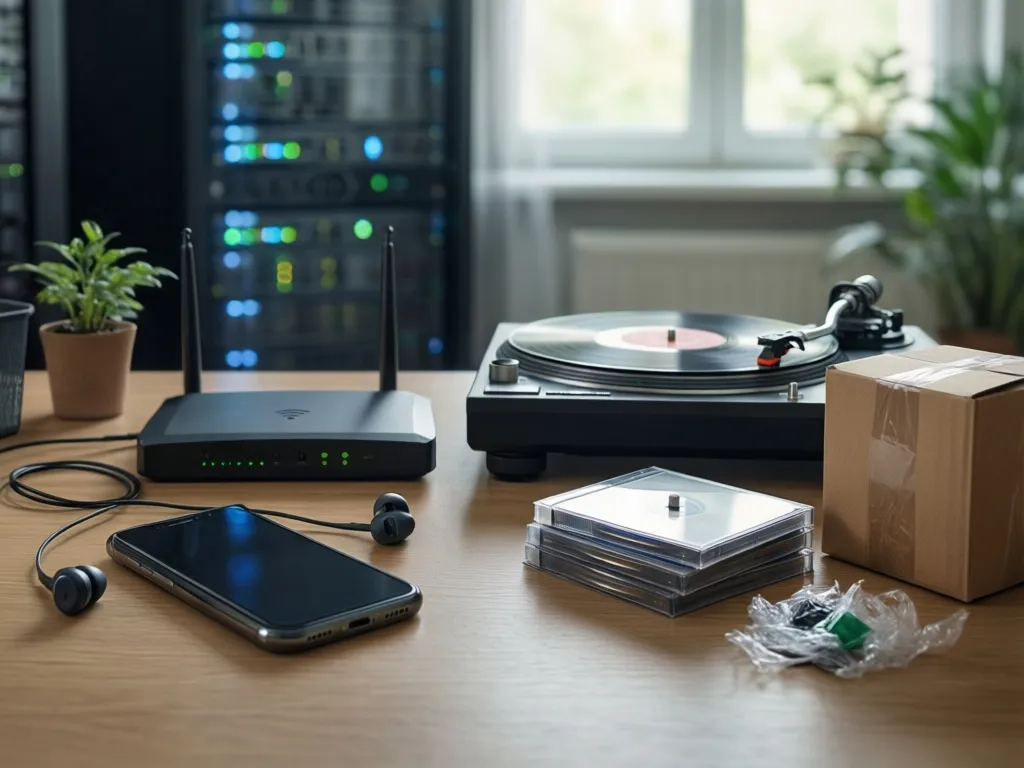
Streaming also creates an indirect hardware footprint. A person may stream music on a device they already own, but the phone, router, and headphones still required raw materials, manufacturing, and transport. In practice, the streaming footprint is rarely only about the stream itself.
What physical media uses
Physical music formats such as vinyl records, CDs, and cassettes carry their own material footprint. They require plastics, metals, paper, inks, and energy to manufacture. They also need packaging, warehousing, and shipping. If the buyer travels to a store to purchase them, transport impacts can rise further.
Once a physical format is in hand, playback can be relatively direct. A CD player or turntable uses electricity while it is running, but the act of playing a disc or record does not require a network connection or repeated data transfer. This is one reason physical media can sometimes look attractive in simple comparisons.
But the production stage is important. A record that is pressed, packaged, shipped, and stored for a limited number of plays carries more impact per listen than a digital file that is streamed many times. The more a physical item is reused, resold, or kept in active circulation, the more its footprint is spread out over time.
Why the comparison changes with listening habits
The clearest difference between the two formats is how the impact is distributed. Streaming has a relatively small incremental cost per play once the infrastructure already exists. Physical media has a larger upfront cost because the object must be made, moved, and sold before it can be used.
That means the number of plays matters. If someone listens to a new album once or twice and never returns to it, a physical copy can look inefficient because all of the manufacturing impact is tied to very limited use. If someone listens to the same album often for years, the initial footprint of a record or CD can be spread across many listens.
Streaming works the other way around. A few listens are easy to justify, but very long listening hours across many devices still add up. For heavy listeners, the device and network energy can become more important than the delivery format alone.
Physical formats are not all the same
People often speak about physical music media as one category, but vinyl and CDs do not behave identically. They differ in materials, size, packaging, and typical use patterns. A record is larger and heavier than a CD, which usually means more material and transport burden per unit. A CD is smaller and lighter, though it still depends on plastics, packaging, and a player.
Cassettes sit somewhere else again, with their own material and playback profile. The important point is that format matters, and broad statements about every physical medium tend to hide the real differences.
Playback equipment matters too. A turntable, amplifier, speakers, CD player, smartphone, wireless earbuds, and smart speaker all have different energy profiles and lifetimes. If a format requires new equipment to use it, that equipment should be counted as part of the footprint.
How device lifetime affects the answer
One of the most overlooked parts of this comparison is equipment longevity. A music service can seem low impact if the only thing counted is a file transfer, but if it encourages frequent device replacement or constant accessory upgrades, the total footprint rises. The same is true for physical media. If a buyer keeps the same player for many years and reuses the same collection, the footprint per listen falls.
Durability helps both sides. A long lived phone, stereo, or speaker system makes streaming less resource intensive per year of use. A long lived collection of records or discs makes physical ownership less resource intensive per listen. Short lived equipment has the opposite effect.
It is also worth separating storage from playback. A shelf of physical media takes space but does not need electricity. A music library in the cloud avoids shelf space but depends on continuous digital infrastructure. Which is better depends on how the system is used and how often it is replaced.
When streaming can be the lower impact choice
Streaming often makes sense when people want access to a large catalog without buying many objects they will rarely use. It can be a better fit when listening is varied, when the same library is shared across multiple devices, or when ownership is unnecessary.
It can also help when it reduces impulse buying. Some physical collections are purchased for novelty and then barely played. In those cases, the manufacturing and shipping impacts may outweigh the benefits of ownership. A streaming subscription can avoid that pattern if it replaces low use purchasing rather than adding to it.
Streaming may also be preferable when it extends the life of a single device already in use. If a person listens on equipment they already own and keeps that equipment for a long time, the marginal environmental cost of each stream may stay relatively modest.
When physical media can be the lower impact choice
Physical media can be the better option when people listen repeatedly to a limited set of albums and keep them for years. It can also be a strong choice when the buyer values ownership and is likely to use the same copy many times instead of revisiting the same title through a digital service that still requires ongoing network and device energy.
Physical formats can make sense in places with weaker or less reliable internet access, because they remove the need for constant data transfer. They can also work well in homes where a shared stereo or player already exists and will remain in use for a long time.
There is another practical point. Secondhand physical media usually has a lower footprint than a newly manufactured copy, because the original production impact has already occurred. Buying used records or CDs can therefore improve the sustainability profile compared with buying new copies, especially when the item is well cared for and used again.
The role of packaging, shipping, and returns
Physical music often travels through more steps before it reaches the listener. Packaging, distribution, and retail all add to the total footprint. Extra wrapping, oversized mailers, or inefficient shipping can all make the impact worse. Returns and duplicate shipments do the same.
Streaming avoids most of those physical logistics, which is one reason it can be lower impact for broad access. But the network and device side still matters, and the convenience of streaming can encourage more listening, more repeated playback, and more always on equipment.
For someone comparing a new vinyl release with a digital stream, shipping is one of the clearest advantages of streaming. For someone comparing a used CD bought locally with repeated high quality streaming on multiple devices, the picture is less obvious.
What is hardest to compare accurately
The hardest part of this topic is that many real world effects are indirect. A person may stream music through a smart speaker that stays on all day. Another may buy a record but use an existing turntable only on weekends. Another may stream from a phone that is already charged for many other tasks. These patterns do not map neatly onto one simple rule.
There is also the issue of system boundaries. A narrow comparison might count only the music file or only the record itself. A broader comparison includes devices, networks, manufacturing, and disposal. The broader view is more useful, but it is also more sensitive to assumptions.
That is why a careful comparison usually avoids claiming that one format is always greener. The more honest answer is that the sustainability result depends on how the format is used, how often it is replaced, and what equipment is already available.
Practical ways to reduce impact whichever format you choose
If you prefer streaming, the simplest way to keep impact down is to make sure the devices you use are long lived and efficient. Avoid unnecessary upgrades, use equipment you already own, and be aware that very high quality playback can increase data use. If you do not need multiple active devices, avoid keeping them on in the background.
If you prefer physical media, buy less but use what you own more often. Choose secondhand when possible, keep packaging and players in good condition, and extend the life of your collection through storage and care. If you are buying new, think about whether the item is something you will actually play many times.
For both formats, the biggest sustainability gains often come from reducing wasteful replacement. A long lived player, a durable phone, and a collection or library that you actually use matter more than a narrow focus on one single play event.
How to decide for a real listening habit
A practical decision starts with a simple question: are you buying access or ownership? If access is the goal and you listen across many different albums, streaming usually fits better. If ownership is the goal and you revisit a small set of recordings often, physical media can make more sense.
Then ask how long each part of the system will last. If the device used for streaming is already owned and likely to stay in use, that lowers the burden. If the physical copy will be played for years on an existing player, that also helps. If either choice depends on frequent replacement, the footprint rises.
Finally, think about how the music actually fits into daily life. Sustainability is not only about the medium. It is also about whether the medium encourages more use of what already exists, less overbuying, and longer life for the things you keep.
What a fair comparison should include
A fair comparison between streaming and physical media should include the full life cycle, not just one visible piece. For streaming, that means devices, networks, and data infrastructure. For physical media, that means materials, manufacturing, packaging, transport, playback equipment, and end of life.
It should also account for use patterns. A medium that is played once is not comparable to one that is used hundreds of times. An album that sits unopened on a shelf is not the same as one that becomes part of daily listening. Those differences change the result more than many people expect.
Once those factors are included, the sustainability question becomes clearer. Streaming is often more efficient for broad, low commitment access. Physical media can be competitive when it is used repeatedly and kept in circulation for a long time. The right choice is usually the one that matches your actual listening habits instead of your assumptions about what is automatically greener.
If you want a simple rule to remember, it is this: the lower impact option is usually the one that gets the most value out of the fewest new resources. In music, that can mean a long lived digital setup, a well used record collection, or a mix of both depending on how you listen.