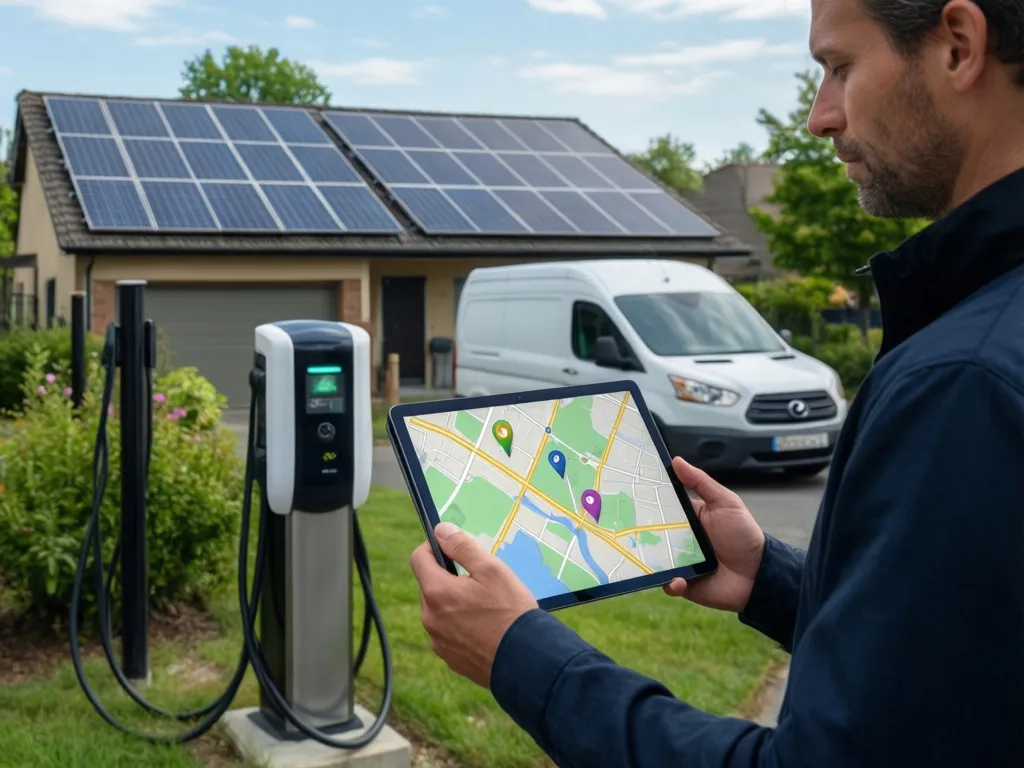
Local search works best when people already need help
For sustainability consultants, installers, and energy service businesses, local SEO is not about chasing general awareness. It is about being visible when someone nearby is looking for a practical solution, whether that means a site assessment, an efficiency upgrade, a heat pump quote, solar installation, or help with a sustainability plan.
That search behavior matters because local intent usually comes with urgency and a clear next step. People are often comparing providers, checking service areas, or trying to find someone with the right credentials and experience. If your website and business profile do not make that easy, another provider will get the call.
The challenge is that local SEO for this kind of work has to do more than attract clicks. It has to support trust. Buyers want proof that you serve their area, understand their property or project type, and can explain the process clearly enough for them to act.
Start with the service and the place, not just the keyword
A strong local strategy begins by matching what you do with where and for whom you do it. A consultant advising businesses on sustainability reporting will attract a different audience from an installer serving homeowners or a contractor working on commercial retrofit projects. The location signal is only useful when it supports a real service fit.
That means your main pages should reflect both the service and the geography in plain language. A page for commercial energy audits in one metro area should not read like a generic sustainability landing page. A page for residential solar installation should not try to rank for broad sustainability consulting terms unless that is actually part of the business.
The search phrase does not need to be exact every time. What matters is that your pages answer the likely question behind the query. People search in different ways, but they still want the same thing: a provider they can trust, in a place they can reach, for a job you clearly handle.
Build location pages that answer real buyer questions
Location pages still matter, but only if they offer more than a city name and recycled copy. A useful local page should explain the specific service area, the types of projects you handle there, and what customers can expect from the first contact through completion.
For example, a page for an energy services company can describe the kinds of buildings it serves, the typical process for assessments or installations, and any local factors that affect delivery, such as permit steps, building types, or climate conditions. A sustainability consultant might explain the sectors served in that region, like offices, nonprofits, manufacturing, or local government.
The point is not to stuff pages with place names. It is to make them credible. Search engines can detect thin location pages, and users can spot them even faster. When the page sounds like it was written for the area and the service together, it is much more useful.
Use your Google Business Profile as a conversion asset
For local service businesses, the business profile is often the first thing people see in map results. It should be treated like a front door, not a formality. The business name, categories, service areas, hours, description, photos, and contact details all help people decide whether to keep going.
Choose the most accurate primary category available for the main service line, then support it with relevant secondary categories if they truly fit your business. Keep your description focused on what you do, who you serve, and where you work. Avoid vague claims that sound impressive but do not help a person choose you.
Photos matter as well. For this sector, images of completed work, team members, vehicles, equipment, and local projects can help people see that you are active in the field. If you work on buildings or infrastructure, real project images are usually more persuasive than stock photos.
Reviews also play a role, not because they are a ranking shortcut, but because they influence trust. A steady pattern of genuine reviews that mention the service type and location can help prospective clients feel more confident about contacting you.
Match content to the way people search for sustainable services
Local SEO content should not be written like an encyclopedia entry. It should reflect the questions people ask before they buy. Some searchers want cost guidance. Others want technical explanations. Others want help understanding whether they need a consultant, an installer, or a full service provider.
Useful content often covers practical decision points such as how a site visit works, what information is needed before quoting, how long a project typically takes to assess, and what kinds of constraints can affect delivery. These are the questions that help people move from curiosity to action.
For sustainability consultants, that may include explaining the difference between advisory work, implementation support, and reporting assistance. For installers and energy service providers, it may mean clarifying what is handled in house, what needs a subcontractor, and what preparation is expected from the customer.
When you answer these questions clearly, you are not only improving relevance for search. You are also reducing friction for qualified leads.
Trust signals are especially important in this market
Local SEO works better when the business can demonstrate that it is legitimate, experienced, and easy to contact. For sustainability and energy services, trust signals often matter as much as keywords. The audience may be making a significant financial decision, and they may also be evaluating technical competence.
That means your site should make it simple to find company details, service coverage, contact options, team information, and project examples. If relevant, include membership in professional bodies, licenses, insurance, or other credentials that are real and verifiable. Do not imply certifications or capabilities you do not hold.
Case examples can also help, as long as they are specific and honest. A short project description with the problem, approach, and outcome gives visitors a better reason to trust you than a generic promise about quality. If confidentiality limits details, you can still describe the type of work and the kind of result without exaggeration.
Consistency across listings supports local visibility
Name, address, phone number, and service area information should be consistent wherever your business appears online. That includes your own website, business profile, directories, and partner listings. Inconsistent details make it harder for users to contact you and can weaken the clarity of your local presence.
This is especially important for businesses that operate from an office but work across multiple regions, or for companies that serve a wide area without a storefront. In those cases, the service area and contact details should be presented carefully so they reflect how the business actually operates.
If you have more than one office or location, each one needs clear and distinct information. Duplicate pages that only swap city names are rarely useful. Each page should serve a real audience and explain what makes that location relevant.
Reviews, photos, and local proof improve click through rates
Search visibility is only part of the job. In local results, people often compare several providers before deciding who deserves the click. Business profiles and location pages that show proof of active work usually perform better than those that only repeat service terms.
Recent project photos, well written reviews, and local references can make a business feel more concrete. A visitor who sees work similar to their own project is more likely to believe that the company can handle the job. This is true whether the business installs equipment, consults on energy use, or manages sustainability improvements across sites.
If you serve both residential and commercial customers, separate the proof for each audience where possible. Someone seeking help for a home will not respond to the same examples as someone responsible for a facility or portfolio.
Technical SEO still matters, but it should support the user journey
Local service businesses sometimes focus heavily on content and ignore technical basics. That can slow down performance, especially on mobile, where many local searches begin. Pages should load quickly, be easy to navigate, and make it simple to call, request a quote, or check service areas.
Clear page structure also helps search engines understand the site. Use descriptive headings, straightforward titles, and internal links that connect service pages, location pages, and helpful educational content. A person reading about heat pump installation should be able to move naturally to a page about the service area or to a page explaining the assessment process.
Structured data can also help when it is implemented accurately. Use it to describe the business, services, and locations in a way that matches the content shown to users. Accuracy matters more than trying to force every possible enhancement.
Track the right results, not just rankings
Local SEO is easy to misread if you only watch search position. A business can rank well and still fail to generate useful leads if the page does not match intent or the contact path is weak.
Track the metrics that show whether local search is producing business value. That usually includes calls, form submissions, direction requests, quote requests, booked consultations, and the pages that contribute to those actions. For energy and sustainability services, you may also want to track which service lines attract the best qualified leads, not just the most traffic.
Pay attention to the queries that bring people in. If the business ranks for broad informational terms but mostly closes work from service and location terms, that tells you where to focus. If one location page earns visits but no leads, it may need a clearer offer, better trust signals, or a more relevant service description.
Common mistakes are usually simple, but expensive
Many local SEO problems in this sector come from the same few issues. The site may talk about sustainability in broad terms without explaining the actual service. The business profile may be incomplete. Location pages may be duplicated. Calls to action may be vague. And reviews may be collected inconsistently or not at all.
Another common issue is mismatch between audience and page. A page may try to appeal to homeowners, business owners, landlords, and public sector buyers at the same time. That usually weakens the message. It is better to create clear pathways for the main audiences you actually serve.
It is also a mistake to overstate coverage. If you only work within a certain region, say so plainly. If you specialize in one type of site, explain that. Search visibility is useful, but qualified leads come from clarity.
A practical way to organize the site
A simple site structure often works better than a sprawling one. Start with a clear service page for each main offer. Add location pages only where you can genuinely serve the area. Use supporting articles or guides to answer common questions about process, cost factors, maintenance, timelines, and decision making.
For example, a site might connect a main service page to a local service area page, then to a guide about choosing the right system or selecting the right consulting scope. That creates a path for both search engines and users.
When the structure is clear, visitors can find the information they need without feeling pushed through marketing copy. That is especially valuable in sectors where the decision is technical, local, and often expensive.
What good local SEO looks like in this field
Good local SEO for sustainability consultants, installers, and energy services feels practical. It helps the right people find the right business in the right place, and it gives them enough information to move forward with confidence.
That usually means accurate profiles, useful location pages, service pages that reflect real offerings, proof that builds trust, and content that answers the questions people ask before they buy. When those parts work together, local search stops being a generic marketing channel and becomes a steady source of qualified enquiries.
From there, the next step is not to publish more pages blindly. It is to improve the pages that already match the highest intent searches, then expand only where the business has a real service fit and a real local reason to be found.