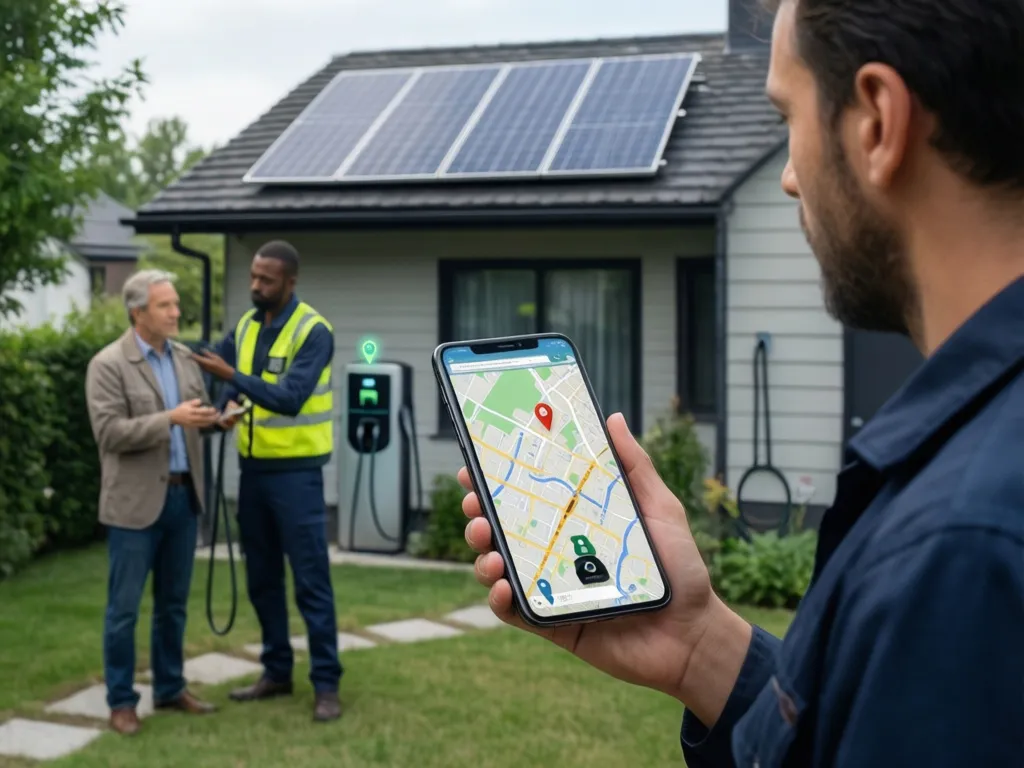
What local SEO needs to do for sustainability services
Local SEO is not just about showing up in search results. For sustainability consultants, installers and energy services, it needs to help the right people find the right offer in the right place. That usually means matching searches with a local problem, a service area, and a clear next step.
A homeowner may search for heat pump installation, a business may look for an energy audit, and a facilities manager may need a consultant who understands retrofit planning. These searches often carry strong local intent because service availability, travel distance, site visits and regional regulations all matter. If your website does not make those details easy to find, search engines and users both have to work harder than necessary.
The best local SEO strategy for this sector combines service clarity, location relevance, trust signals and practical content. It should help a visitor understand what you do, where you work and why you are a good fit before they ever contact you.
Start with the exact services people search for
One common mistake is to describe the business only in broad terms such as sustainability consulting or energy solutions. Those phrases may be accurate, but they are often too vague to match how people search. Searchers tend to use concrete service terms, such as energy assessment, solar installation, insulation upgrade, EV charger installation, decarbonisation planning or building performance advice.
To improve relevance, make each core service visible on its own page and explain it in plain language. A service page should answer three questions quickly. What is the service, who is it for, and what outcome does it help with? If you serve both homeowners and commercial clients, keep those audiences separated so the page does not feel generic.
This matters because local search is partly about intent matching. Someone looking for a contractor usually wants speed, pricing signals and availability. Someone looking for a consultant usually wants expertise, process and evidence of past work. Putting all of that into one page can blur the message and weaken conversion.
Build location relevance without making thin pages
Location signals help search engines understand where you work and help users decide whether you serve them. But location pages only work when they add real value. A page that simply swaps city names is unlikely to help anyone.
A better approach is to create location pages only for places where you genuinely work and can explain something specific. That could include local regulations, common building stock, climate conditions, utility programs, permit requirements or typical property types. For example, an installer serving older homes in one area may need different messaging than one working mainly on newer commercial sites elsewhere.
If you do not have enough unique local information for a full standalone page, it may be better to mention the area on a broader service page and support it with case examples, testimonials, maps or route coverage details. Search engines tend to reward pages that demonstrate real local usefulness rather than repetitive keyword placement.
Use your Google Business Profile carefully
For many local searches, a Google Business Profile is one of the first places people see. It can influence both visibility and trust, especially for service providers that rely on map results. The profile should reflect the business accurately, with a consistent name, address if relevant, phone number, website, categories and service descriptions.
Choose categories that match what you actually provide. Do not stretch into unrelated categories just because they look popular. Add services, business hours, photos, and a description that states your main offerings in clear language. If you operate from a service area rather than a customer facing office, make sure the profile settings reflect that model.
Photos help more than many businesses expect. Real images of staff, equipment, project sites, vehicles, offices and completed work can make the profile feel credible. Keep them current and relevant. For sustainability and energy services, visual proof matters because customers often want evidence that you really do the kind of work you describe.
Make trust signals easy to verify
People searching for sustainability related services often want reassurance before they contact anyone. They may be comparing technical competence, compliance awareness, safety, qualifications and experience with similar projects. That means trust signals should be prominent and easy to check.
Use your website to explain who performs the work, what standards or procedures guide the work, and how quality is managed. If your team has licenses, memberships, certifications or specialist training, place them where they are easy to find and explain what they mean in practical terms. Avoid cluttering pages with badges that do not add clarity.
Case examples can also support trust, but they should be factual and specific. Describe the type of property or site, the service delivered, the challenge solved and the result in plain language. If you cannot share exact numbers or client names, you can still explain the scope and process without overstating outcomes.
Write service pages for both search engines and humans
A strong service page should do more than repeat a keyword. It should help a visitor understand the work, compare providers and decide whether to get in touch. That means using clear headings, direct language and a logical flow.
Start with a concise explanation of the service. Then explain where it is useful, what the process usually looks like and what kinds of customers you work with. Include practical details such as whether the work involves site visits, surveys, design support, coordination with contractors or aftercare. If the service has limits, say so. Clear boundaries increase trust.
For sustainability consultants, that may mean explaining whether you support strategy, reporting, retrofit planning, compliance support or procurement advice. For installers, it may mean explaining the systems you install, the property types you work on and the areas you cover. For energy services, it may mean separating audits, efficiency measures, monitoring and implementation support so the offer does not become vague.
Use local proof instead of generic claims
Local proof is more persuasive than broad statements. A visitor is often trying to answer a simple question: have you done this kind of work here before? Even when exact project details must remain confidential, you can still show local familiarity.
This might include the types of buildings you commonly work on, the municipalities or regions you serve, the program contexts you understand, or the common constraints in your service area. You can also reference the practical realities of local weather, access, permitting or building age when relevant and accurate.
Reviews can help, but they should be encouraged and used responsibly. Ask satisfied clients for specific feedback on communication, punctuality, technical understanding and job quality. Those details are more useful than vague praise because they answer the concerns a local buyer is actually weighing.
Match content to different search intents
Not every local search means the same thing. Some people want immediate service. Some are researching a bigger project. Some are comparing options for a future decision. Your content should reflect those differences instead of treating every visit as the same.
Fast decision searches usually need pricing cues, service area clarity, timeline expectations and contact options. Research driven searches need educational content that explains options, tradeoffs and terminology. Comparison searches often benefit from pages that clarify what makes your approach different, such as consultation first, design and install under one roof, or support for planning and compliance.
This is especially important in sustainability and energy work, where buyers may be confused by technical language. If your page answers the question behind the search rather than just the keyword, it becomes more useful and more likely to convert.
Structure your site so local pages support each other
Local SEO works better when pages reinforce one another. A service page should link to relevant location pages when that location truly matters. A location page should link back to the core service pages. Project pages, FAQs and resource articles should all point toward the same main offers.
For example, a page about heat pump installation can link to a page about your service area, a page about the consultation process and a page about funding or planning guidance if those topics are relevant to your business. A sustainability consulting page can link to pages on energy audits, carbon reduction planning or compliance support. This internal structure helps users and search engines understand the hierarchy of your website.
Do not overcomplicate the structure. The goal is clarity, not volume. A small set of strong pages usually performs better than a large set of thin pages that compete with each other.
Content ideas that fit the sector
Some content formats work especially well for sustainability consultants, installers and energy services because they answer real local questions.
A page explaining how a site survey works can reduce friction before a consultation. A guide to common retrofit or upgrade mistakes can help users avoid bad decisions. A page describing how you work with architects, property managers or homeowners can help each audience understand the process. A local FAQ can answer practical questions about permits, access, timelines, seasonal scheduling or service coverage.
The best content does not need to be long for the sake of length. It needs to reflect actual customer concerns. If people in your market ask whether a project can be phased, whether the property must be vacant, or how maintenance is handled after installation, answer those questions clearly.
Measure what matters
Local SEO should be judged by more than rankings. Rankings can move for many reasons and do not always reflect business value. You also want to see whether local search visitors are taking meaningful actions.
Track calls, form submissions, map interactions, direction requests if relevant, and visits to service pages from location pages. Watch which pages lead to contact and which ones attract traffic without engagement. That tells you where your content is helping and where it needs more specificity.
It also helps to check how your business appears for different kinds of searches. One query may surface your profile in maps, another may bring up a service page, and another may trigger an informational article. Those results reveal how search engines interpret your site and whether the page structure matches your actual business model.
Common mistakes to avoid
Thin city pages, vague service descriptions and inconsistent business information are some of the most common problems. Another frequent issue is trying to rank for every possible term instead of focusing on the services and areas you can support well.
It is also common to overuse technical language. While your work may be highly technical, many searchers are not fluent in industry terminology. Use plain wording first, then add technical detail where it improves understanding. If a term matters, define it.
Finally, avoid promising outcomes you cannot verify. Sustainability and energy work often involves variables outside your control, including property condition, site constraints, budget and regulatory context. Honest framing usually performs better in the long run because it attracts better matched leads.
What a practical local SEO plan looks like
A workable plan usually starts with a small number of strong service pages, a properly maintained business profile, and location content that reflects real service coverage. From there, add proof through case examples, testimonials, photos and helpful FAQs. Then connect those pages with a simple internal structure so visitors can move from problem to service to contact without confusion.
For sustainability consultants, installers and energy services, this approach is especially valuable because the buying decision often depends on trust, locality and technical fit. When your site makes all three visible, local search becomes less about chasing traffic and more about attracting the right projects in the places you actually serve.