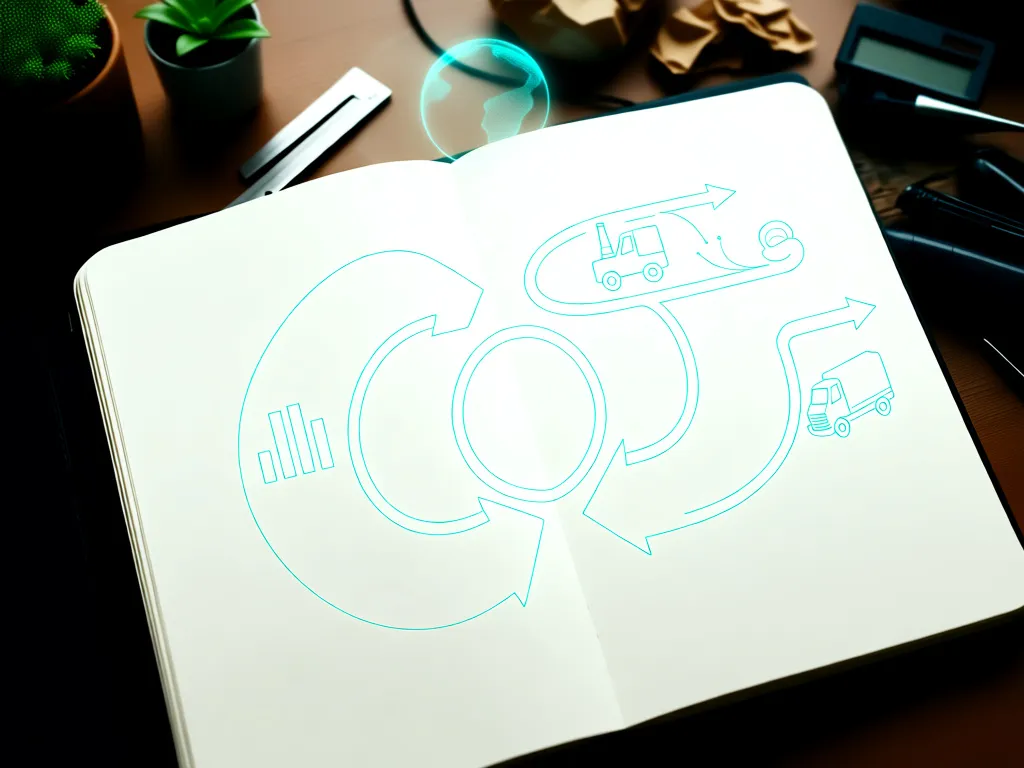
What is life cycle assessment
Life cycle assessment abbreviated LCA is a standardized method for quantifying the environmental impacts of a product or service across its whole life. That means measuring inputs and outputs from raw material extraction, through manufacturing, transport, use and end of life. The purpose is to show where emissions and other impacts arise so designers, procurement teams and policy makers can make informed choices that reduce harm.
Four phases of an LCA
- Goal and scope definition This first phase defines what the study will cover. It specifies the product system, the functional unit which normalizes results, the system boundaries and the intended audience or application of the results.
- Life cycle inventory analysis Inventory work compiles data on material and energy flows, emissions to air water and soil, and waste. Data come from suppliers direct measurement or from secondary databases.
- Life cycle impact assessment Inventory flows are translated into environmental impacts using impact assessment models. Common impact indicators include global warming potential, ozone depletion potential and resource depletion among others.
- Interpretation Results are analyzed to identify hotspots, test sensitivity to key assumptions and draw conclusions that are aligned with the stated goal.
Choosing the functional unit and system boundaries
The functional unit is the reference that allows different options to be compared. For a paint it could be square meters of coated surface. For a smartphone it could be one device used for a specified number of years. A clear and appropriate functional unit is essential because it determines how materials and performance are normalized.
System boundaries decide which life stages are included. Cradle to grave covers all stages from resource extraction to final disposal. Cradle to gate stops at the factory gate and is useful for upstream supplier comparisons. Cradle to cradle and circular scenarios explicitly model reuse repair and recycling flows. Be explicit about which boundary is used because results change with the chosen scope.
Data types quality and representativeness
LCA relies on two data types. Primary data come from direct measurements at a factory or from a supplier. Secondary data come from life cycle inventory databases and literature. Primary data are preferred for the stages you can influence. Secondary data are necessary when primary data are unavailable but should be selected for geographical and temporal representativeness.
Key data quality dimensions are technological representativeness meaning the process matches the real technology, geographical representativeness, temporal representativeness and completeness. Document assumptions and perform sensitivity analysis when data quality is limited. Uncertainty will always exist but transparent reporting and uncertainty analysis let users judge how robust the conclusions are.
Allocation choices and common pitfalls
When multiple products share a process or when recycling flows return material to the system an allocation rule is required to distribute impacts. Common allocation approaches are allocation by mass allocation by economic value and substitution or system expansion which models avoided burdens when a secondary product replaces another product on the market. Standards provide guidance on choosing allocation but the choice should be justified and tested with sensitivity analysis.
Pitfalls include double counting, inconsistent boundaries between compared systems and using allocation by economic value when prices are volatile. When recycling is important model both closed loop and open loop recycling scenarios and document how residuals are handled.
Impact categories and interpreting greenhouse gas results
Full LCA covers multiple impact categories. Climate change or global warming potential is often the primary focus when discussing emissions. Global warming potential is expressed relative to a reference gas over a specified time horizon. Many LCAs use a 100 year time horizon because it is widely adopted in reporting, but the time horizon should match the decision context.
Interpreting results requires attention to scale and to the relative contribution of each life stage. A hotspot analysis identifies stages or components that contribute most to a chosen impact category. Hotspots are candidates for intervention but always check whether a change that reduces one impact increases another. For example a material swap that lowers CO2 may raise water use. Use multi criteria evaluation when trade offs matter for the decision.
Applying LCA to product design and procurement
LCA is most useful when integrated early in design or supplier selection. Typical interventions informed by LCA include choosing lower impact materials optimizing product weight and energy use extending product life through repairability and designing for recycling. For procurement use supplier level primary data for the most impactful components and verify data where possible.
When prioritizing actions use two simple decision criteria. First target large contributions to the impact category of interest. Second prefer changes that are robust under reasonable uncertainty and do not create unacceptable trade offs in other impact categories. Iterative LCA can show the marginal benefit of each design change and help build a pathway of improvements that add up to meaningful reductions.
Verification communication and standards
Credible reporting follows established standards and undergoes independent review when results are used for external claims. International standards provide a framework for LCA studies. Product category rules define consistent ways of performing LCAs for products within the same category and environmental product declarations provide a standard format for communicating results. Third party verification increases credibility especially when comparisons are published in marketing materials.
Practical steps to start an LCA for a product
Start by defining the decision you want the LCA to inform and select a clear functional unit. Map the product system and identify data owners for primary data. Use a reputable database for background processes and document assumptions. Run a baseline LCA perform a hotspot analysis and then model targeted design changes. Finally report results with transparent assumptions sensitivity analysis and a statement of limitations.
When LCA is not the right tool
LCA is powerful for comparative and systems oriented decisions but it is not a one size fits all solution. For rapid internal trade off checks lightweight screening tools or targeted carbon accounting may be more practical. Use LCA when you need a comprehensive evidence base for product level decisions or when external disclosure requires standardized assessment.
Applied carefully LCA turns data into actionable insight. It makes visible the stages where emissions arise and shows which interventions are likely to yield real reductions. For teams building lower impact products the process of gathering data engaging suppliers and testing design choices is often as valuable as the final numbers because it drives operational changes that last.