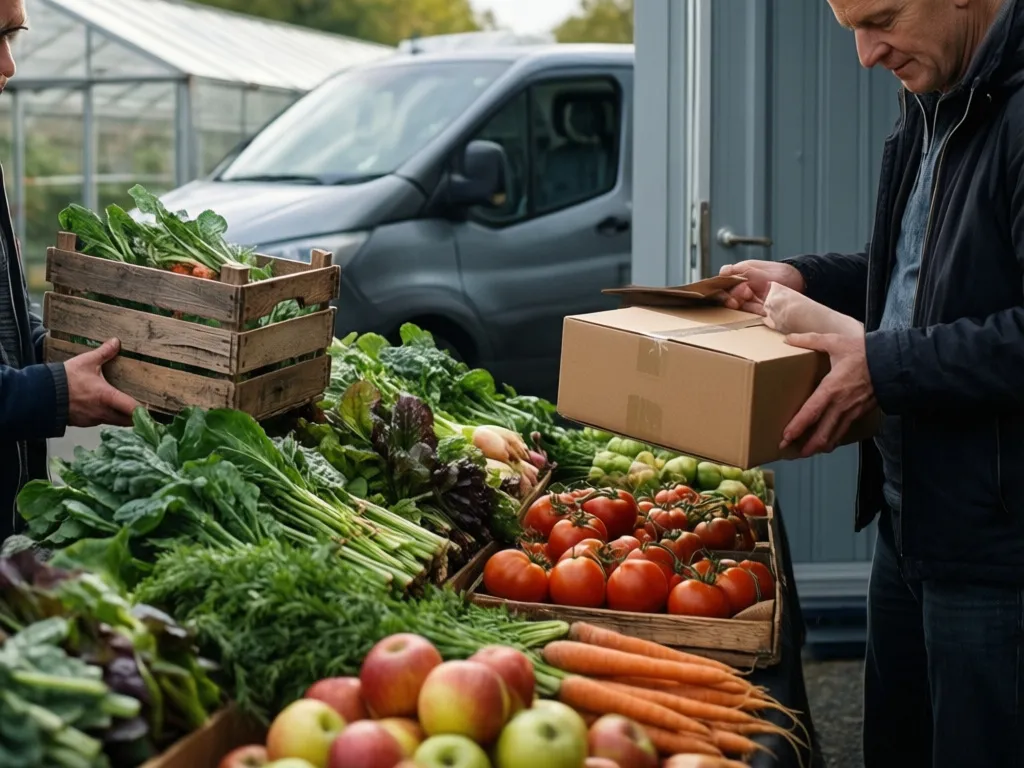
What seasonal and local food can change
People often hear that buying local or eating seasonally is better for the climate. That idea contains some truth, but it leaves out important details. Food emissions come from many stages, including farming, fertilizer use, refrigeration, processing, packaging, storage, and transport. A short supply chain can help, but it does not automatically make a food lower impact.
Seasonal food means eating produce when it is naturally available in a given region, rather than relying on heated greenhouses or long cold storage. Local food means food produced closer to where it is eaten. Those two ideas overlap, but they are not the same. A tomato can be local without being seasonal, and seasonal food can be shipped from another region if climate and harvest timing make that practical.
The climate value of either choice depends on what replaces it. If seasonal food replaces air freighted produce or energy intensive greenhouse production, the benefit can be meaningful. If local food replaces a more efficient production system elsewhere, the gain can be smaller than people expect.
Why distance is only part of the story
Transport is visible, so it gets a lot of attention. But in many foods, transport is not the largest source of emissions. Production methods often matter more than shipping distance. For example, how a crop is grown, what inputs it uses, and whether it needs heated buildings or heavy refrigeration can outweigh the emissions from moving it.
This is one reason the phrase food miles can be misleading on its own. A food that travels farther may still have a lower footprint if it is grown efficiently and in season. A food from nearby may have a higher footprint if it requires energy intensive conditions or significant storage before sale.
That does not mean transport is irrelevant. It means transport should be treated as one factor among several, not the whole answer. The mode of transport matters too. Air freight is usually much more emissions intensive than sea or truck transport, while short local trucking distances may contribute relatively little compared with production.
When seasonal food tends to help
Seasonal food is most likely to have a climate advantage when it avoids emissions from artificial growing conditions or long cold storage. In colder climates, out of season produce may be grown in heated greenhouses or stored for long periods. Both can add energy use. In those cases, choosing a crop at its natural harvest time can reduce impact.
Seasonal eating can also support simpler supply chains. Food that is harvested close to peak ripeness and sold soon afterward may need less storage, less protection, and fewer rounds of handling. That can reduce waste, though the size of the effect varies by product and region.
Another practical benefit is that seasonal food often aligns with local agricultural conditions. That can encourage a diet built around foods that grow well in a place without extraordinary inputs. From a climate standpoint, that is often more relevant than the mileage between farm and plate.
When local food tends to help
Local food can reduce transport emissions when it replaces long distance shipping, especially air transport. It can also make supply chains easier to trace, which may help buyers ask more specific questions about growing methods, refrigeration, and waste. That visibility can support better decisions, but it is not a climate benefit by itself.
Local food may be a good choice when it comes from farms that use lower input practices, when it reduces packaging, or when it shortens storage time enough to preserve quality and cut waste. In some cases, buying local can also support diets that are more closely tied to what a region can produce efficiently.
Still, the word local does not guarantee low emissions. A nearby item can still be grown in energy intensive facilities, transported in inefficient ways, or discarded because it spoils quickly. If a local item is more likely to be wasted, the climate outcome can worsen.
Common misconceptions about seasonal and local food
One common misconception is that local food is always better than imported food. That is not reliably true. The footprint depends on production method, storage, transport mode, and waste. Distance alone cannot answer the question.
Another misconception is that seasonal food is always available fresh from nearby farms. In reality, some seasonal food is preserved, frozen, canned, or stored. Those forms can still be climate sensible. In some cases, frozen or preserved food can be a practical way to reduce waste and enjoy a crop outside the short harvest window.
A third misconception is that all greenhouse grown produce is bad. The climate impact of greenhouse production depends on the energy source, the crop, the climate, and the system design. Some greenhouse systems are resource intensive, while others may be more efficient than people assume. Without specifics, it is not possible to judge fairly.
People also sometimes assume that organic, local, and seasonal mean the same thing. They do not. Each describes a different attribute. A food can be local but not organic, organic but not local, seasonal but not local, or all three at once. For climate decisions, the label alone is not enough.
What to look at instead of relying on a single label
If you want a more accurate picture, start with the food itself and how it was produced. Ask whether it needed heated space, extensive refrigeration, or long storage. Consider whether it was transported by air, sea, or truck. Think about how much packaging it needed and how likely it is to be wasted before being eaten.
Then compare alternatives within the same food category. The climate difference between two versions of the same ingredient is often more meaningful than the difference between local and non local on its own. A seasonal apple from one region may be better than an out of season imported fresh berry, but a frozen berry can sometimes be a sensible option if it avoids air freight and waste.
Finally, think about diet patterns. In many food systems, the largest climate gains come from reducing high impact foods and wasting less of what is bought. Seasonal and local choices can help, but they usually work best as part of a broader eating pattern rather than as the only strategy.
How shoppers can make better decisions
The most useful habit is to ask a simple question: what am I trading off here? A local product may reduce transport but increase storage or heating. A seasonal product may cut production emissions but be less convenient. A frozen or preserved product may avoid waste and remain efficient even if it is not fresh.
When you are choosing between options, consider freshness, spoilage risk, and how the food will actually be used. If a product is likely to sit in the fridge until it is discarded, the climate cost of waste can erase the advantage of a supposedly better choice. Buying what you will use is often more important than chasing a perfect label.
It also helps to be flexible. Eating seasonally does not mean eating the same limited menu all year. It means letting harvest cycles shape some of the choices. That can lead to a diet that is varied, practical, and easier to source with fewer inputs.
How restaurants and retailers can use the idea well
For restaurants and food retailers, seasonal and local sourcing works best when it is specific. General claims are easy to overstate. Better practice is to identify the ingredients or categories where seasonality clearly changes sourcing, and then explain why those items were chosen.
Menus and shelves can also help customers understand that preservation is not failure. Frozen, canned, or stored foods can reduce waste and still fit a climate conscious approach. When a business communicates that clearly, customers are less likely to confuse freshness with sustainability.
Procurement teams should also ask suppliers about production conditions, not just origin. A nearby source can still rely on energy intensive systems. A more distant source can sometimes be the better climate choice if it is grown efficiently and transported well. The useful question is not only where the food comes from, but how it is produced and moved.
Practical ways to avoid overclaiming
If you talk about seasonal or local food in marketing, menus, or policy, keep the claim narrow and verifiable. Describe what is local, what is seasonal, and what aspect is expected to improve. Avoid implying that all local food is lower carbon or that seasonal eating always beats every alternative.
When the evidence is uncertain, say so. A careful statement is more credible than a sweeping one. For example, it is safer to say that seasonal sourcing can reduce reliance on energy intensive storage or greenhouse production than to claim that it is always the most sustainable option.
That approach helps people make better choices and protects trust. Climate language is strongest when it reflects the actual system behind the food, not a simplified story about distance or freshness.
Questions people often ask
Is local food always better for the climate?
No. Local food can lower transport emissions, but production method, storage, and waste can matter more than distance. A nearby product is not automatically lower carbon.
Does seasonal food always have a smaller footprint?
No. Seasonal food often helps when it avoids heated greenhouses or long storage, but the result depends on how the food is produced and delivered.
Are frozen fruits and vegetables a climate problem?
Not necessarily. Frozen foods can reduce waste and preserve seasonal harvests. Their climate impact depends on production, processing, and transport.
What matters most when choosing between options?
Look at production method first, then transport mode, storage needs, packaging, and waste risk. That gives a more reliable picture than origin alone.
Seasonal and local food can be part of a lower impact diet, but the real benefit comes from understanding what is actually changing in the supply chain. Once you look beyond labels, the tradeoffs become clearer, and the best choice is often the one that combines efficient production, low waste, and food you will genuinely use.