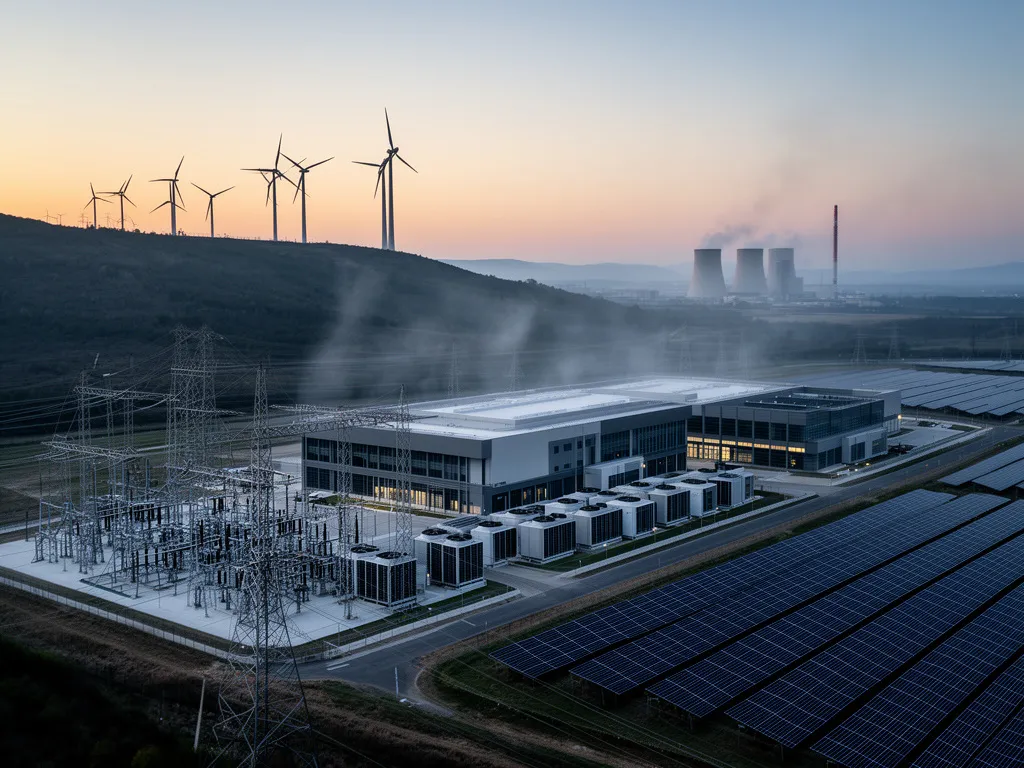
How electricity, energy sourcing and shared infrastructure create cloud emissions
Cloud services do not produce emissions directly in the same way a boiler does. Instead they cause emissions when the electricity that powers servers, networking and cooling is generated. Three technical factors determine the resulting greenhouse gas footprint. First, the amount of electricity consumed by the workload. Second, the carbon intensity of the electricity supply that powers the infrastructure. Third, how that electricity and the infrastructure are shared and allocated across multiple tenants and services.
What counts as cloud electricity use
Electricity use in a cloud environment is the sum of several contributions. The primary component is compute time on physical servers and any dedicated accelerator hardware. Storage systems and networking equipment add baseline draw. Cooling, power conversion and lighting add overhead at the facility level. Operators typically express facility efficiency as power usage effectiveness, abbreviated PUE, which describes the ratio of total facility electricity draw to IT equipment electricity draw.
Why energy sourcing matters
Two workloads with identical electricity consumption can have very different emissions depending on the electricity used to serve them. That difference comes from the mix of generation technologies on the local grid at the times the electricity is drawn. Renewable generation displaces fossil generation and lowers the carbon intensity of delivered electricity. Conversely, when generation is dominated by fossil sources the same kilowatt hours create more carbon dioxide equivalent emissions.
How shared infrastructure and allocation affect reported emissions
Cloud platforms rely on shared physical resources. Tenants do not own servers; they are allocated slices of capacity. This multi tenancy complicates both operational decisions and accounting. When several customers share a host, simple per instance allocation using CPU cores or RAM can misrepresent the true marginal electricity associated with adding a workload. Additionally, many sustainability statements about cloud providers describe the provider level energy sourcing rather than the hour by hour electricity that served a particular workload. That distinction matters for any team trying to understand or reduce their actual operational emissions.
Measurement concepts teams must understand
Average versus marginal grid carbon intensity
Average carbon intensity is the emissions per unit of electricity averaged across a region and a period of time. It is useful for high level comparisons but can obscure when incremental demand actually causes additional fossil generation. Marginal carbon intensity attempts to capture the emissions associated with a change in consumption at a given time. For load shifting and scheduling decisions marginal values provide better guidance because they reflect which generation sources respond to short term demand changes.
Location based and market based accounting
Corporate greenhouse gas guidance distinguishes two scopes for electricity accounting. The location based approach uses the grid average where the consumption occurs. The market based approach attributes the emissions profile of contractual instruments used to match consumption with specific energy sources, such as power purchase agreements or energy attribute certificates. Both views are legitimate but they answer different questions. Location based accounting reflects physical system outcomes. Market based accounting reflects contractual claims and procurement strategies.
Temporal matching matters
Contracts that match annual energy volumes to renewables do not guarantee that the same hours of consumption were supplied by zero carbon generation. When teams care about the actual emissions at the moment a workload runs they need hourly or sub hourly matching. Without temporal alignment a workload running at a high fossil intensity hour may still be reported as covered by renewables under annualized claims.
Common measurement pitfalls
Relying exclusively on provider level headline claims
Cloud provider sustainability communications often describe progress at the company or fleet level. Those statements are useful for understanding long term investments. They do not by themselves specify the carbon intensity of an individual workload in a given region and hour. Treat fleet level claims as context rather than direct evidence of workload emissions.
Using PUE as a proxy for emissions
PUE measures facility efficiency and is important for cost and energy optimization. It does not indicate the carbon intensity of the electricity used. A very efficient facility connected to a high carbon grid can produce more emissions than a less efficient facility powered by low carbon electricity.
Double counting and instrument quality
Certificates and contractual instruments can be transferred and retired to represent renewable generation. To avoid double counting, verify that the instrument is retired for the period and region claimed. Also evaluate whether the instrument reflects additional generation that would not have existed without the procurement, or whether it is simply reallocating existing attributes. The environmental value depends on additionality and temporal fidelity.
Operational levers that reduce electricity related emissions
Right size workloads and increase utilization
Lowering the electricity a workload consumes is the most direct way to reduce emissions. Rightsizing virtual machines, consolidating batch jobs and choosing server classes appropriate to the workload reduce total kilowatt hours. Higher average utilization on shared hosts spreads idle overhead across more useful work and lowers electricity per unit of output.
Schedule flexible workloads to low carbon hours
For workloads that can be delayed or scheduled, aligning execution with periods of lower marginal carbon intensity reduces emissions. This can be achieved by shifting batch processing to hours with high renewable output or low demand. To take advantage of this lever teams need access to hourly or sub hourly carbon intensity signals for the regions they use.
Choose regions and availability zones intentionally
Not all regions have the same grid carbon intensity or access to low carbon procurement. When regulatory, latency and cost constraints allow, placing flexible workloads where the grid intensity or the contracted energy mix is lower reduces emissions. Beware of treating region choice as a silver bullet; the decision should consider data sovereignty, latency and total system impact.
Use energy aware autoscaling and instance selection
Autoscaling rules that consider both performance and emissions can reduce overall footprint. For example scaling down non critical capacity during high carbon intensity periods and preferring instance families that provide better performance per watt are practical tactics. Instrumenting autoscaling with carbon signals enables automated, repeatable decisions.
Leverage storage and caching to avoid repetitive compute
Reduce duplicated work by caching results, using content delivery and avoiding unnecessary recomputation. Fewer compute cycles translate to less electricity consumed, particularly for workloads dominated by repeated short tasks.
Procurement and contract levers that influence the electricity mix
Understanding renewable procurement instruments
Power purchase agreements finance additional renewable generation and can change system outcomes over time. Energy attribute certificates provide a way to claim renewable supply but vary in temporal granularity and additionality. When evaluating procurement options choose instruments that provide demonstrable incremental clean generation and that match the temporal needs of the workloads where possible.
Demand flexibility and grid services
Participating in demand response or offering flexibility to the grid can reduce system level emissions if the flexibility displaces high carbon generation. Cloud customers and providers can design programs that allow non critical workloads to be modulated in ways that help balance the grid while lowering emissions. These programs require clear operational rules and measurement to avoid unintended resilience impacts.
Practical guidance for teams that must measure and reduce cloud emissions
Start with electricity consumption metrics
Measure compute hours, instance types and facility overhead using provider billing and telemetry. Convert those operational metrics into electricity units using server class power profiles or provider supplied estimates. Avoid trying to infer emissions directly from high level provider sustainability narratives without per workload electricity estimates.
Obtain hourly or near hourly carbon intensity data
Where possible use credible carbon intensity signals for the grid region hosting your workloads. These signals enable marginal aware scheduling and better operational decisions. If hourly data is not available, clearly note the limitations when reporting emissions reductions from scheduling or shifting strategies.
Combine operational changes with procurement
Operational efficiency reduces kWh. Procurement influences the carbon per kWh. Use both approaches together. Prioritize efficiency for short term, verifiable reductions while engaging procurement teams to pursue longer term, high quality instruments that create additional low carbon generation.
Use transparent, auditable accounting practices
Document assumptions, data sources and how shared infrastructure allocations are made. Distinguish between location based and market based accounting in reports. When using certificates or contractual claims make the retirement and matching details available so stakeholders can verify the claim.
Test interventions and measure real change
Before scaling an emissions reduction tactic run controlled experiments. For scheduling, compare consumption and estimated emissions for the same workload run at different times. For instance selection, measure electricity per unit of useful work rather than relying on projected numbers alone. This discipline avoids regressing on performance or creating unforeseen costs.
Questions to ask providers and procurement teams
- Can you provide hourly or sub hourly carbon intensity estimates for the region and availability zone I use
- How do you allocate facility level emissions across tenants in shared environments
- What instruments underlie your market based claims and are those instruments retired to prevent double counting
- Do you operate or participate in demand flexibility programs that affect marginal emissions and can I opt workloads into them
Asking these questions clarifies what claims mean in practice and gives teams the evidence needed to make operational choices grounded in the actual emissions their workloads cause.
Communicating results internally and externally
When reporting progress separate engineering level improvements from procurement effects. Provide both the location based and market based perspectives where relevant and be explicit about temporal matching and any allocation rules used. Clear documentation builds trust and avoids misinterpretation of reductions that stem from contractual reallocation rather than actual changes in the electricity that powered the workloads.
Reducing cloud related emissions requires attention to both the energy a workload consumes and the electricity that supplies it. Shared infrastructure enables efficiency gains but complicates allocation and claims. Practical progress comes from measuring electricity use carefully, using temporal carbon signals where possible, combining operational levers with high quality procurement, and reporting with transparent accounting choices.