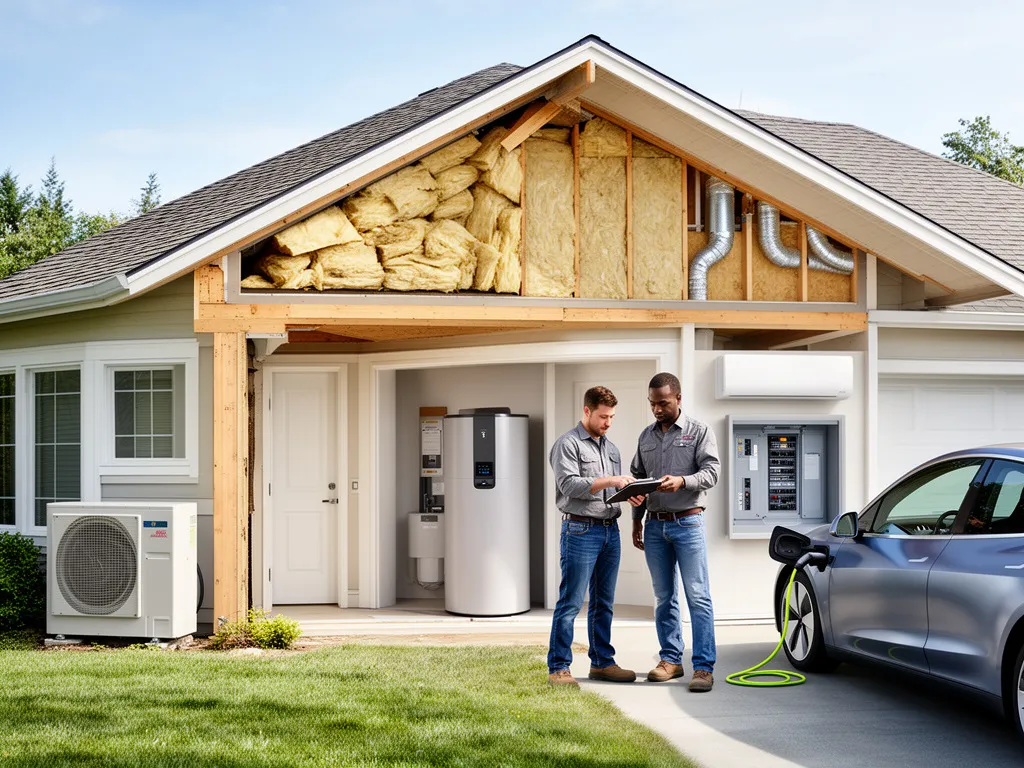
Where to start when improving home energy
Start by treating the building shell and systems as a sequence. Reducing heat loss and uncontrolled airflow is the foundation. After solid weatherization, choose heating and cooling systems that match your climate and your insulated envelope. Finally assess electrification of water heating, cooking and other loads once the home requires less energy to maintain comfort.
Quick prioritization steps
- Audit first Get a basic energy audit or walk through with a blower door test or infrared inspection if possible.
- Air seal Seal gaps in the envelope at penetrations, windows and attic joins before adding insulation.
- Insulate strategically Prioritize attic, then basement or crawlspace, then exterior walls where practical.
- Right size systems After the envelope is tighter and better insulated, size heating and cooling equipment to the new load.
- Electrify selectively Replace fossil fuel appliances with electric equivalents where wiring and service allow and where economics and grid emissions make sense.
Insulation and air sealing: what to focus on
Insulation works best when combined with careful air sealing. Uncontrolled air leakage can bypass insulation entirely and drive moisture problems. Typical priorities are attic and roof spaces first because heat moves upward, then foundations and floors above unconditioned spaces, then exterior walls.
How much insulation should I add
Recommended insulation levels vary with climate and with the part of the house being insulated. In general, colder climates benefit from higher thermal resistance in ceilings and walls. Rather than relying on a single number, check local building code, Energy Star guidance or national energy department recommendations for your climate zone. An auditor or contractor should compare current levels to recommended targets and show likely energy savings and payback periods.
Common mistakes to avoid
Adding insulation without addressing air leaks and ventilation can trap moisture and harm durability. Blocking soffit vents when insulating the attic without providing proper ventilation can create roof problems. Insulation must be installed to manufacturer instructions and without compressing materials that are designed to perform at a given thickness.
Heating systems: choosing with electrification in mind
Heating choice depends on climate, existing distribution infrastructure and whether you plan to electrify. Key options are electric heat pumps, resistance electric heat, natural gas or oil furnaces and hybrid systems that combine heat pumps with a backup fuel furnace.
Why consider heat pumps
Heat pumps move heat instead of burning fuel. Modern air source heat pumps provide efficient heating and cooling for many climates. Ground source heat pumps can offer higher and steadier efficiency but have larger upfront costs and site requirements. If you are tightening and insulating the home, smaller heat pump systems may be adequate which lowers equipment cost and complexity.
Do heat pumps work in cold climate
Heat pump performance varies with outdoor temperature and with model. Manufacturers now offer cold climate models engineered to maintain useful heating capacity at lower temperatures. For very cold locations, plan for either a backup heating source or a cold climate heat pump with a higher capacity. Have a qualified installer size equipment based on the home after weatherization to avoid oversizing.
Sizing and controls
Proper sizing matters. Oversized equipment cycles frequently and reduces efficiency. Undersized equipment may not maintain comfort on the coldest days. After reducing building loads with insulation and air sealing, request a heat loss calculation and demand that equipment be sized to the calculated load. Smart thermostats and zoned control can improve comfort and reduce wasted run time.
Cooling and ventilation
Cooling choices are closely tied to heating. Heat pumps provide both heating and cooling in one system. In humid climates, properly sized equipment and ventilation with dehumidification control are essential to avoid comfort problems. Improve shading, air sealing and attic insulation first because those measures reduce peak cooling loads and allow smaller, more efficient air conditioning systems.
Mechanical ventilation
Tighter homes require controlled ventilation to maintain indoor air quality. Options include energy recovery ventilators that exchange heat and moisture between outgoing and incoming air. Ventilation strategy should be part of the audit and designed with the expected occupancy and building tightness in mind.
Electrification: what to convert and when
Electrification replaces on site combustion with electric appliances. Common targets are space heating, water heating and cooking. Decide based on appliance lifespan, available incentives, the local electricity mix and whether the electrical panel can accept additional load.
Water heating
Electric heat pump water heaters tend to be more efficient than resistance electric tanks and are often a straightforward electrification step. They work well in conditioned spaces where excess heat is acceptable. Tankless electric water heaters are another option but check peak demand implications for the electrical service.
Cooking
Replacing gas ranges with electric induction ranges removes combustion byproducts from the kitchen and often improves cooking responsiveness. Induction cooktops require compatible cookware. Consider ventilation needs and upfront costs. Incentives for electric appliances can improve the economics.
Grid and panel considerations
Electrification may require panel upgrades or residential meter changes. Coordinate with an electrician early to assess available capacity and the cost of upgrading service. If you plan to add rooftop solar or a battery, design electrical upgrades to integrate distributed generation and potential future loads like electric vehicles.
Costs, incentives and payback
Economics depend on local fuel prices, incentives, financing and the starting condition of the house. Weatherization and insulation often offer the fastest payback because they reduce many downstream energy uses. Many jurisdictions and utilities offer rebates, tax credits or low interest loans for insulation, heat pumps and electric water heaters. Check national energy program pages and local utility offers to capture incentives that change project economics substantially.
How to evaluate a project
Ask contractors for estimated annual energy savings based on measured or modeled loads. Compare simple payback and lifetime cost including maintenance. Include non energy benefits such as improved comfort, reduced combustion risk and lower maintenance. For electrification projects, consider the emissions intensity of the local grid now and expected changes over the life of the equipment.
Working with contractors and getting the right scope
Choose contractors with experience in energy retrofits and with the specific systems you plan to install. Request a heat loss calculation for heating equipment sizing and a blower door test or infrared scan for insulation work when possible. Get multiple bids and compare the scope, not just the bottom line. Verify that installers follow manufacturer installation requirements and that warranties cover performance.
Questions to ask a contractor
- Will you perform a heat loss calculation and a blower door test before sizing equipment
- How will you sequence air sealing and insulation with system installation
- What efficiency ratings and models do you recommend and why
- Do you provide references for similar projects in this climate
Practical decision criteria checklist
Assess each potential upgrade against these criteria. How much will it reduce energy use and operating cost. Will it improve comfort and indoor air quality. What are the upfront cost and available incentives. Does the home electrical service and layout support electrification. What is the expected lifespan and maintenance burden of the new system.
Next steps for homeowners
Schedule a basic audit, gather utility bills and any previous home inspection reports, and prioritize weatherization and air sealing before major equipment swaps. Use incentives to lower upfront cost. Plan installations so that improvements to the envelope come first and equipment is sized to the new load. Small, well sequenced investments often deliver better results than large equipment replacements done without preparing the building.
If you want help evaluating options for a particular climate or home type, collect the home age, construction type and recent utility bills and consult a qualified energy auditor or contractor who can model the options and provide local incentive information.