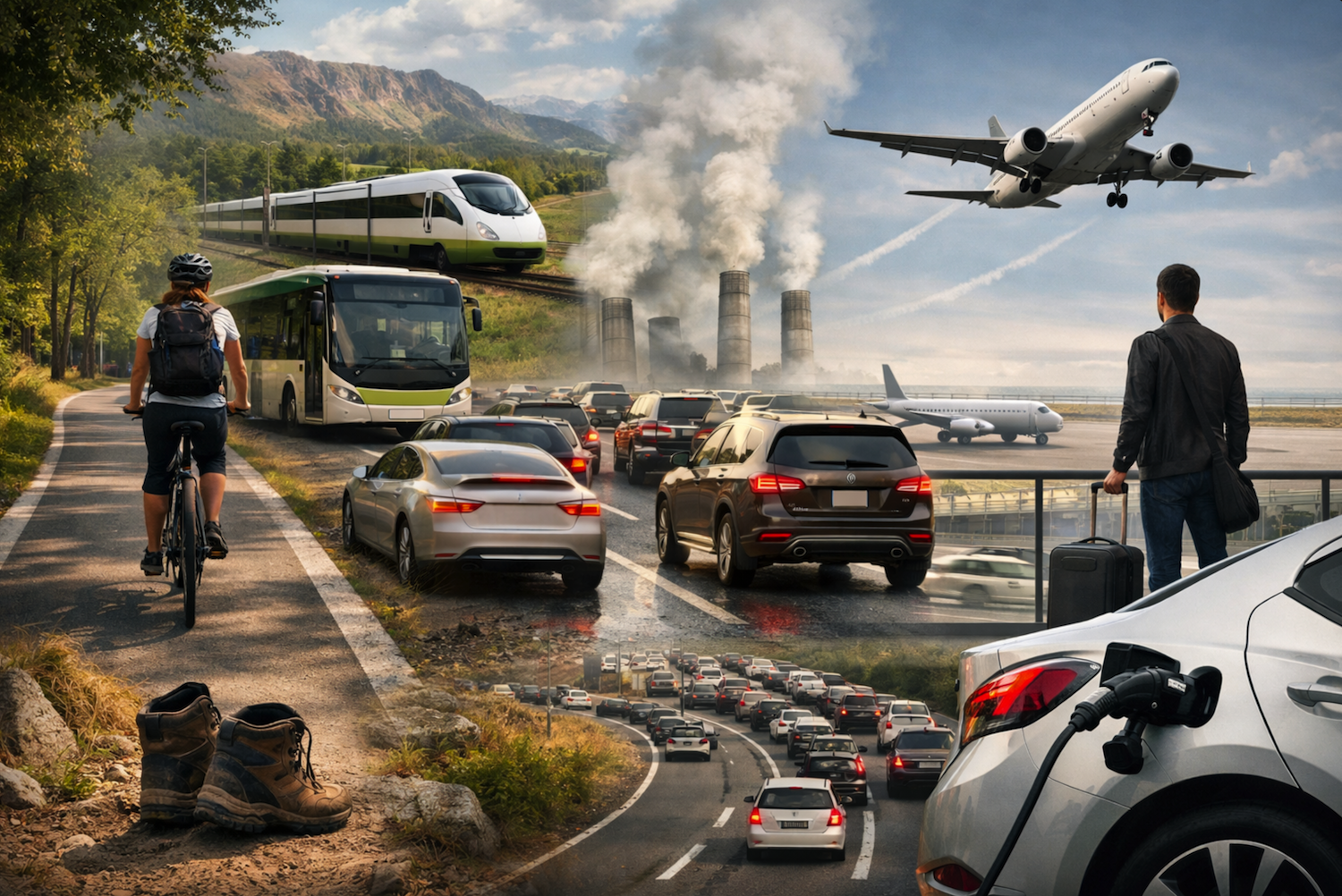
Transportation is one of the most visible ways our daily routines intersect with the climate. Whether you walk to the store, drive to work, or catch a flight for a holiday, each decision carries an emissions consequence. Understanding how those consequences add up and which levers actually lower climate impact helps you make smarter travel choices that fit your lifestyle.
Why travel matters for your personal carbon footprint
When people talk about shrinking their carbon footprint, travel often ranks near the top of the list. That’s because moving people and goods consumes fuel, uses electricity, and requires vehicles and infrastructure that have emissions embedded in their manufacture and maintenance. A single long trip can outweigh weeks of other low-impact choices, while everyday commuting habits compound into substantial annual emissions. Focusing on transportation gives you a high-return opportunity to reduce your overall climate impact.
How different modes compare
Not all travel is created equal. Walking and cycling are the lowest-emission ways to get around since they require minimal infrastructure and no direct fuel. Public transit generally performs better than single-occupancy car travel because emissions are spread across many passengers. Trains, especially those powered by low-carbon electricity, are a strong choice for medium- and long-distance journeys.
Private cars vary widely. Older, fuel-inefficient vehicles and heavy SUVs tend to emit more per kilometer than small efficient cars. Battery electric vehicles remove tailpipe emissions entirely, but they are not emission-free when you consider electricity source and the upfront emissions tied to manufacturing. The climate advantage of an electric vehicle increases when it is charged with low-carbon electricity and driven many miles over its lifetime.
Air travel is distinct because it burns fuel at high altitude where certain emissions have a stronger warming effect. For shorter distances, trains often offer lower emissions and similar door-to-door travel time when you account for airport procedures. Long-haul flights remain a significant source of emissions when they are taken frequently.
Upfront versus operational emissions
When comparing options, it helps to think in two buckets. Operational emissions are the greenhouse gases produced while a vehicle is running: fuel burned, electricity used, or other direct energy consumption. Upfront, or embodied, emissions occur during manufacture, assembly, and delivery of the vehicle or infrastructure. For example, electric cars often have higher embodied emissions than equivalent combustion-engine cars because of battery production. However, their operational emissions can be much lower, allowing them to offset the upfront investment over time if they are charged with cleaner electricity.
Meaningful actions that reduce travel emissions
Not every change needs to be radical to be effective. Switching a few high-emission choices for lower-impact alternatives can produce noticeable reductions. Replacing short car trips with walking or cycling shrinks operational emissions immediately and delivers health benefits. Choosing public transit for daily commuting spreads emissions across many riders and is usually lower per passenger-kilometer than driving solo. Where a car is required, carpooling and combining errands into a single trip reduce total miles driven.
For people who fly, the most impactful steps usually involve flying less often and favoring direct routes when possible, because takeoffs and climbs are among the most fuel-intensive phases of a flight. When air travel is unavoidable, choosing rail for medium distances and selecting economy seating, which spreads emissions across more passengers, improves efficiency per traveler.
Electrification is a structural change that matters at scale. Switching a frequently used vehicle to an electric model can lower lifetime emissions if the vehicle is charged with a cleaner grid mix. Similarly, advocating for low-carbon electricity in your neighborhood or selecting green energy from your provider multiplies the benefit of electrified transport.
Daily habits that add up
Small routine changes are often the easiest to maintain. Altering departure times to avoid traffic, instituting a weekly car-free day, or arranging hybrid work to cut commuting days all reduce fuel consumption. Regular vehicle maintenanceproper tire pressure, scheduled servicing, and removing excess weight from your carimproves fuel efficiency. In driving behavior, smoother acceleration, lower cruising speeds, and limiting idling reduce fuel use without sacrificing convenience.
Planning smarter trips
Trip planning reduces unnecessary mileage. Before you leave home, think of errands that can be handled in a single outing rather than separate one-way drives. For families, grouping school drop-offs, groceries, and appointments saves time and fuel. When planning longer journeys, compare door-to-door travel time and emissions for different modes; sometimes a slightly longer train trip can be less stressful and lower-emission than driving or flying.
When to choose technology versus behavior
Both technological upgrades and behavior changes have roles to play. Technologylike electric vehicles, more efficient engines, and improved public transit fleetscan dramatically lower operational emissions, but it often requires capital and time. Behavioral shifts, such as riding a bike more often or working remotely part-time, can take effect immediately and guide the demand that shapes later technology adoption. A combined approach maximizes impact: adopt low-emission technology where it makes sense and change daily habits to reduce unnecessary travel.
Ways to track progress
Measuring travel emissions helps you see which moves matter most. Simple methods include keeping a log of miles driven and major flights, then converting those trips into emissions using trusted online calculators. For commuters, note how many days you used a car versus public transit or active modes each week, and look for patterns to improve. Regular tracking reveals whether a new behavior sticks and which choices yield the biggest reductions in your personal footprint.
System-level actions you can influence
Individual choices matter, but the broader transport system shapes what options are realistic. You can support policies and investments that expand reliable public transit, safe cycling lanes, and electrified vehicle charging infrastructure. Voting for projects that prioritize active travel and denser, mixed-use neighborhoods helps reduce the need for long car journeys. Employers can be encouraged to adopt flexible schedules, remote work options, and incentives for using low-carbon commute modes.
Every trip you skip or replace with a lower-impact option lowers your contribution to warming. The most effective reductions usually come from a mix of fewer flights, greater use of public and active transport, smarter vehicle choices, and small but consistent behavior changes. Choosing one or two realistic actions and tracking their impact is more valuable than an all-or-nothing approach. Over time, those modest shifts create habits that matter for both your personal footprint and the larger effort to cut transport emissions worldwide.